
Kanker Palace Heritage
Kanker Palace Heritage
The Story of Kanker Palace Heritage
Nestled in the quiet town of Kanker, in the heart of Chhattisgarh, stands a palace that seems to whisper stories of a bygone era — the Kanker Palace Heritage.
Long ago, when this land was still part of the princely states of India, a royal residence called Radhanivas Bagicha was built here. In 1937, it was lovingly rebuilt into the graceful white palace that stands today — a fine blend of colonial architecture and Indian elegance. During the British Raj, it even served as the residence of the British Agent, and later, it became the ancestral home of the Royal Family of Kanker.
Today, the same royal family opens their doors to travelers, allowing guests to live — even for a few days — like nobles of another time.
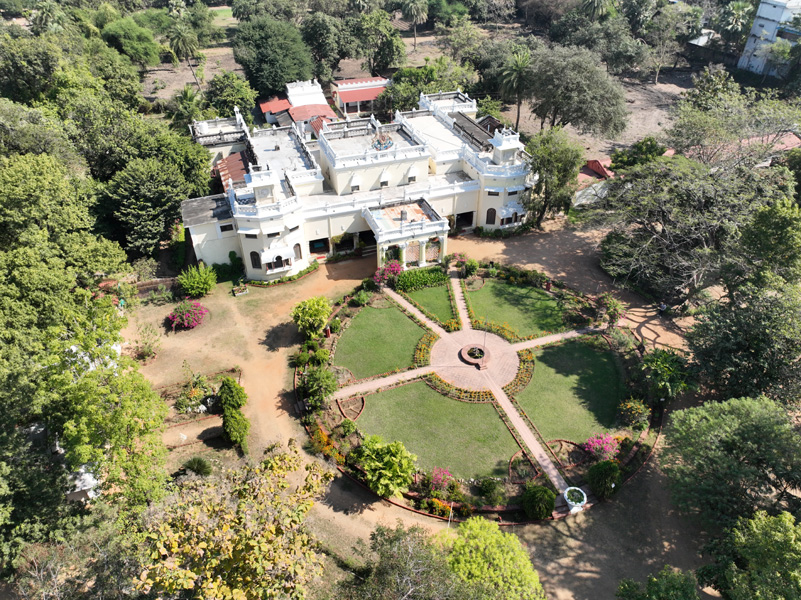
As one approaches the palace, lush gardens, mango orchards, and fields of green embrace the grand structure. The white arches, high ceilings, and long verandas instantly take you back to an age of slow grace and timeless charm.
Inside, the heritage rooms and cottages are warm and inviting. Each room tells its own story — antique furniture polished by time, large wooden windows opening to morning light, and the soft echo of footsteps down marble corridors. Some rooms lie within the main palace; others rest quietly in garden cottages, surrounded by whispering trees.
The hosts — descendants of the royal family themselves — personally welcome guests, often sharing tales of their ancestors over cups of chai in the veranda. Meals are freshly prepared in the palace kitchen, using vegetables and herbs grown right in their own garden — food served not as hotel fare, but as part of the royal household.
Beyond the palace walls, adventure and serenity await. Guests can join jeep safaris into the forest, visit tribal villages to witness Chhattisgarh's ancient traditions, or simply take long walks through paddy fields and mango groves. Evenings often bring quiet conversations under starlit skies, where one can feel the calm rhythm of rural India.
Kanker Palace is more than a hotel — it's a living story. A place where history still breathes through every wall, where the present touches the past gently, and where guests leave with more than memories — they take with them a sense of timeless India.
Our story is deeply rooted in heritage, culture, and the timeless charm of central India.
Kanker Palace, built in the early 20th century and lovingly rebuilt in 1937, was originally known as Radhanivas Bagicha. During the British Raj, it served as the residence of the British Agent. Today, it continues to be the family home of the erstwhile royal lineage of Kanker.
Set amidst lush gardens, the Palace reflects an elegant Colonial architectural style—stately, graceful, and resonating with an old-world ambience. Staying here is not just about accommodation, but about stepping into history while still enjoying the comfort of modern amenities.
Our Accommodation
We offer thoughtfully designed guest spaces that balance heritage with comfort:
- 5 rooms in the Right Wing of the Palace, each with vintage charm
- 2 rooms in the Annexe, perfect for those who enjoy privacy
- 4 independent cottages, surrounded by nature in the gardens
All rooms are equipped with modern facilities including Western-style baths and toilets, ensuring comfort, while the interiors reflect the earthy character of the region.
Experiences & Itineraries
Kanker Palace serves as your gateway to Bastar and beyond. Our curated itineraries offer immersive journeys into the heart of tribal Chhattisgarh, designed to be both authentic and respectful. Experiences include:
Village Tours – Witness the rhythms of tribal life, traditions, and crafts.
Nature Excursions – Explore forests, rivers, and backwaters, rich in flora and fauna.
Boating & Angling Safaris – Spend serene moments in secluded river stretches.
Jeep Safaris – Discover wildlife sanctuaries and untouched landscapes.
Cultural Insights – Meet local artisans, attend community gatherings, and experience regional festivals.
We also create tailor-made packages for guests with specific interests, whether cultural immersion, adventure, or leisure.
Our Philosophy
At the heart of everything we do lies a guiding principle:
To open a humane and sensitive window into the life of this region and its people — without disturbing its natural rhythm.
Our aim is to give you not just a journey, but a memory — one where history, culture, and nature come together in harmony.
We warmly invite you to experience our home, our heritage, and our land. Let us share with you the untouched beauty and living traditions of Kanker and Bastar.
Nestled in the serene town of Kanker, surrounded by forests, fertile plains, and the musical rhythm of tribal life, stands the magnificent Kanker Palace — a timeless symbol of Chhattisgarh's royal legacy, grace, and cultural synthesis. This historic palace, once the residence of the ruling family of the princely state of Kanker, now opens its doors to travelers seeking a deeper connection with the spirit of Central India — where history, art, and community coexist in harmony.
Kanker Palace is more than a monument of stone and marble; it is a living institution of hospitality and heritage. Built in the first quarter of the 20th century and reconstructed in 1937, this grand estate was originally known as Radhanivas Bagicha — a name that evokes its lush gardens and the divine grace of Radha. It was once the residence of the British Agent during the colonial period, standing as a blend of European architectural design and Indian royal aesthetics. After independence, the palace reverted to the Deo family of Kanker, one of Chhattisgarh's most respected royal lineages, whose roots trace back nearly a millennium.
The history of the Kanker royal family stretches back to the 11th century, when their ancestors migrated from Puri, the sacred seat of Lord Jagannath, to Central India. Over the centuries, they ruled as guardians of the Bastar-Kanker region, mediating between tribal communities, nature, and governance. Their rule was marked by benevolence, social reform, and a deep respect for the tribal ethos that defines this region even today.
According to Rani Rajeshwari Devi, the gracious matriarch of the family and wife of Late Maharaj Kumar Surya Pratap Deo, their ancestors built a series of palaces marking the growth and transition of Kanker's history. The first palace was constructed at Kila Pahad, a fort atop the hills that offered a commanding view of the forests. The second and third palaces were later donated for public use — reflecting the family's commitment to community welfare. The fourth palace, the present-day Kanker Palace, was established in 1937 and remains the most celebrated symbol of their enduring legacy.
Today, the palace is presided over by Maharaja Adhiraj Aditya Pratap Deo, a historian, author, and Associate Professor, whose book "Kings, Spirits & Memory in Central India" explores the deep connection between tribal beliefs and royal traditions. His thoughtful stewardship ensures that Kanker Palace continues to serve as both a heritage home and a cultural bridge, bringing visitors closer to the living traditions of Bastar and Chhattisgarh.
Kanker Palace stands as a fine example of colonial-era architecture infused with local sensibilities. Its cream-yellow façade, white domes, and graceful arches evoke a nostalgic charm reminiscent of the Raj period. The palace was designed by European architects, while its interiors feature a blend of Indian craftsmanship and Western elegance — a reflection of the cosmopolitan character of early 20th-century royal India.
The main dome hall, supported by Corinthian columns with intricate gold filigree detailing, radiates majesty. The first-floor gallery, overlooking the grand hall, is adorned with ornate stonework and carved balustrades. The palace's Italian marble floors, German lighting fixtures, and British sanitary fittings reveal a global influence on royal lifestyle — yet the heart of the building remains deeply rooted in Chhattisgarh's soil.
Surrounding the main palace are verdant gardens, pathways lined with flowering trees, and serene courtyards where the royal family often gathers in the evenings. The gardens, originally planted as part of Radhanivas Bagicha, remain impeccably maintained and continue to exude the fragrance of bygone grandeur.
Since 1991, Kanker Palace has been lovingly transformed into a heritage homestay, allowing discerning travelers to experience royal life amidst rustic tranquility. This transformation was the visionary idea of Late Maharaj Kumar Surya Pratap Deo (fondly called Jolly) and his younger brother Maharaj Kumar Ashwini Pratap Deo (Jai). Together, they opened their ancestral home to guests as part of a larger dream — to offer a "humane and sensitive window into the life of this region" without disturbing its natural rhythm.
Today, guests are welcomed not merely as tourists but as part of the extended royal family. The palace features five stately rooms in the Right Wing, two elegant suites in the Annexe, and four charming cottages set amidst the gardens. Each room is tastefully furnished, retaining the earthy flavor of the region while offering modern amenities such as western-style bathrooms, comfortable bedding, and private verandahs.
The Cottages and Annexe Rooms are ideal for those seeking privacy and immersion in nature, while the main palace rooms allow guests to live within the historic walls where generations of royalty once resided.
Dining at Kanker Palace is a highlight in itself — the Aquarium Dining Room serves delectable home-cooked meals prepared with local produce and traditional recipes. Guests can enjoy both Indian and Continental cuisines, accompanied by conversations with the royal hosts who share stories from their family archives, hunting expeditions, and tribal legends.
Kanker Palace is strategically located — just a few hours from Raipur, the state capital, making it an ideal gateway to Bastar, one of India's most fascinating and culturally rich regions. From here, travelers can easily embark on curated tours into the tribal heartland of Chhattisgarh.
- The royal family personally curates and organizes heritage and eco-tours, ensuring that visitors experience the essence of this land with respect and authenticity. The itineraries include:
- Tribal village visits, where guests can interact with the Gond, Maria, and Muria communities, witnessing traditional crafts, markets, and festivals.
- Jeep safaris through wildlife sanctuaries and dense sal forests, home to a variety of birds and animals.
- Boat safaris and angling trips in the serene backwaters of the Mahanadi or Gangrel Reservoir, where migratory birds like the Cotton Teal, Brahminy Duck, and Open-billed Stork gather.
- Visits to ancient temples, waterfalls, and artisans' villages in Kondagaon and Narayanpur, showcasing the region's famed bell-metal and terracotta crafts.
- Kanker Palace thus serves as the perfect base for exploration, balancing comfort with adventure, and history with discovery.
Perhaps the most enchanting aspect of Kanker Palace is its deep connection with tribal culture and local art forms. Guests are often greeted by the vibrant sounds of drums and the colorful whirl of tribal dancers, who perform traditional dances like Panthi, Karma, Saila, and Gendi. These performances, often held in the palace courtyard, are not mere entertainment but living expressions of Chhattisgarh's ancient rituals, mythology, and community life.
Each dance tells a story — the Pandavani narrates episodes from the Mahabharata, the Suwa celebrates the bond between farmers and their cattle, while the Kaksar marks the arrival of festive seasons. Dancers don traditional attire, ornate jewelry, and elaborate headgear, accompanied by live music played on instruments such as the nagara, tudburi, mohri-shehnai, and mandar.
The royal family encourages guest participation, allowing visitors to dance, drum, or simply sit by the bonfire under the starlit sky, immersed in the rhythms of tribal Chhattisgarh. These cultural evenings embody the Palace's philosophy — to connect cultures through shared joy and understanding.
Beyond hospitality, Kanker Palace continues to play a vital role in community development and heritage conservation. Within its grounds stands a primary school, supported by the palace family, reflecting their long-standing commitment to education and social welfare. The palace also supports local artisans by promoting traditional crafts and organizing small exhibitions for visitors.
Through its eco-tourism initiatives, Kanker Palace ensures that tourism benefits local communities — from hiring village guides and performers to sourcing ingredients and crafts locally. This model of sustainable heritage tourism has earned Kanker Palace recognition as a benchmark for responsible travel in Central India.
To stay at Kanker Palace is to experience more than luxury — it is to journey into a living story. The echoes of royal footsteps, the aroma of local spices, the sound of tribal drums, and the soft rustle of sal leaves all combine to create an atmosphere that transcends time.
As the sun sets beyond the palace gardens, guests often gather in the verandah, sipping tea while listening to the evening calls of peacocks and hyenas from the nearby forests. Dinner is often served under the stars, accompanied by laughter, stories, and the kind warmth of the hosts — a tradition that has endured for generations.
Kanker Palace remains not only a monument of history but also a sanctuary of living culture. It continues to welcome travelers from around the world — historians, writers, artists, and seekers of authenticity — offering them an intimate glimpse into the soul of Chhattisgarh.
For those who seek a retreat where royalty meets simplicity, luxury meets legacy, and travel meets transformation, Kanker Palace is more than a destination — it is a revelation.
Kanker Palace Heritage — where time stands still, traditions breathe, and every guest becomes a part of a century-old story of grace, generosity, and belonging.